Sayya Dushanbieva
📍
San Francisco, CA
Currently seeking creative spaces where curiosity drives the work, with care for craft, inclusion, and designing products that matter.
Nouré
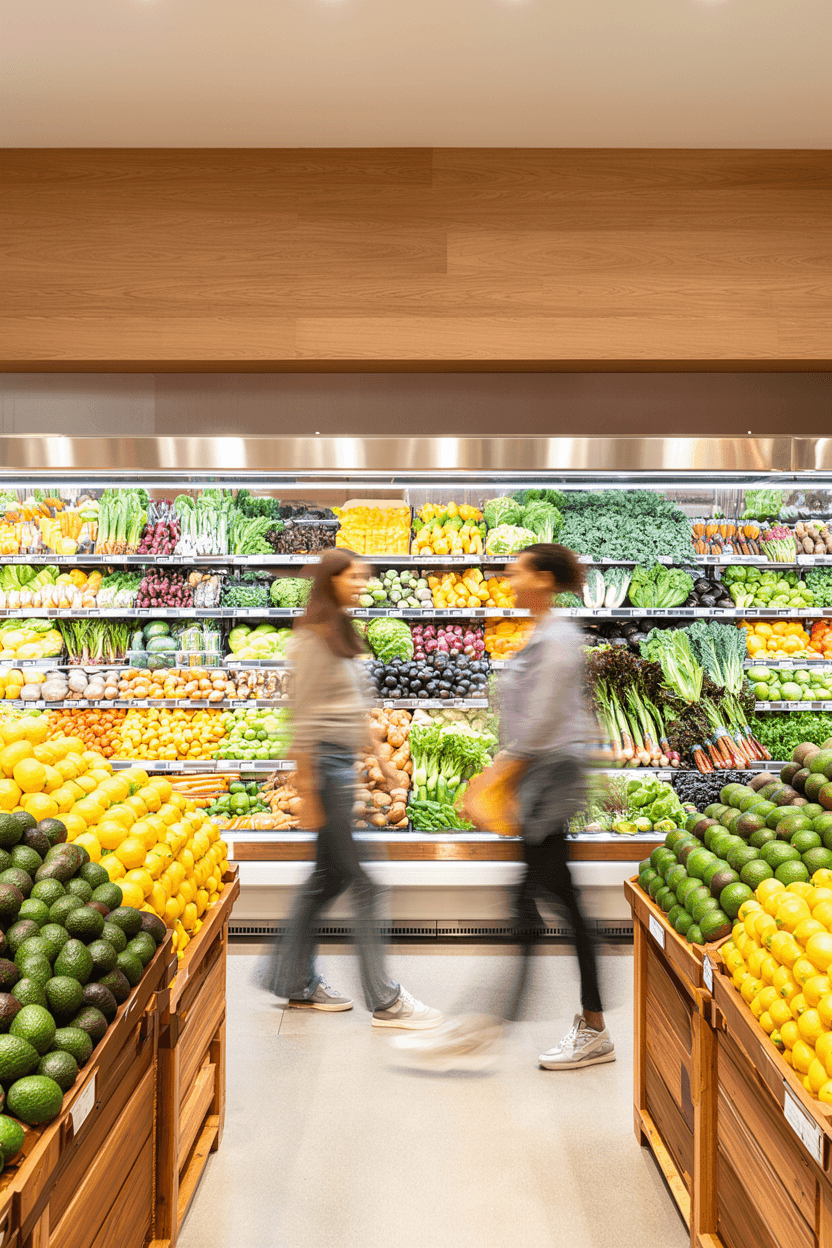
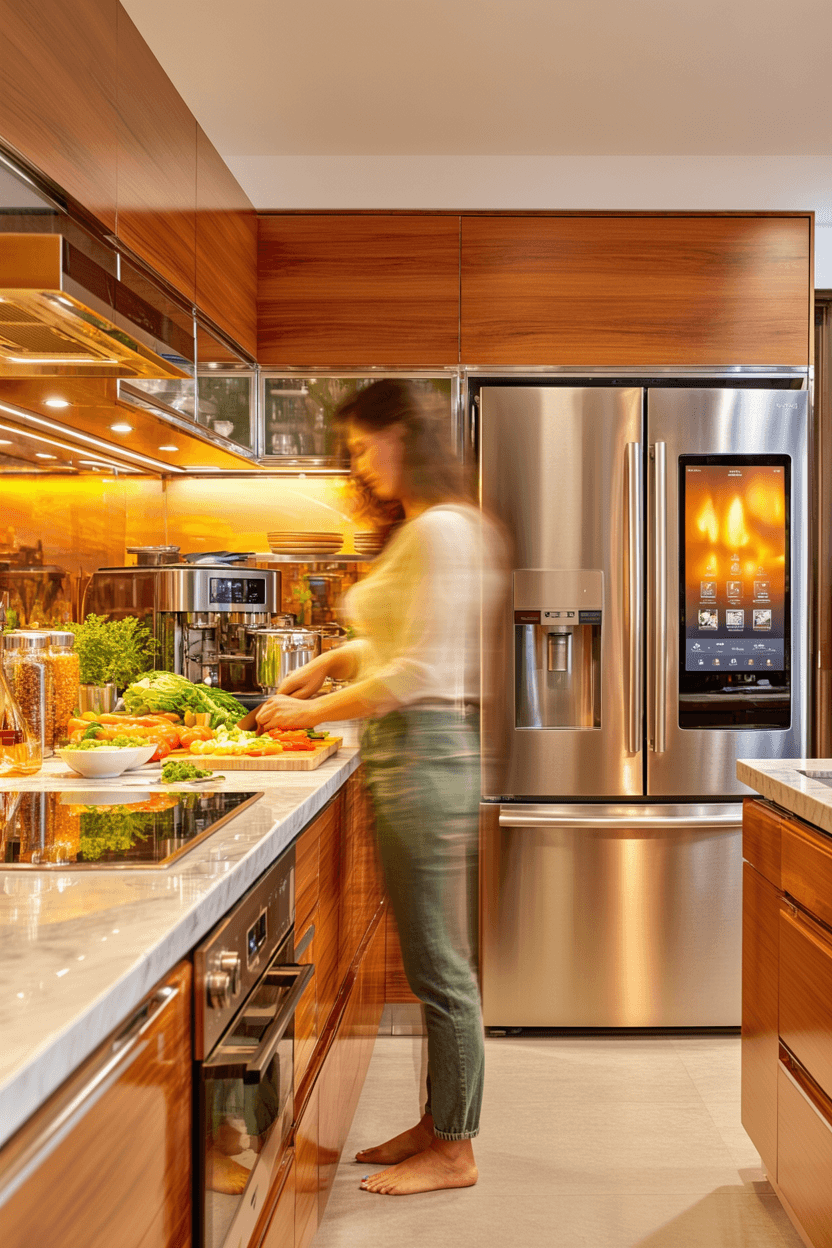
Food intelligence platform that closes the gap between what you buy and what you eat.
Timeline
12 weeks
Spring 2025
Role
Lead UX/UI Design
Research -> hi-fi
Team
P. Chandra, Y. Sinha
1 PM, 1 Design leader (advisory)
Scale
Concept pre-launch
In-depth research with 5 households
You shop. You forget. You waste.
You shop again.
Sound familiar?
OVERVIEW
Nouré is a food intelligence platform built around a simple idea: your food life shouldn't require five different apps or the mental load of tracking it all yourself.
Today, grocery delivery, kitchen inventory, and community food sharing all exist in isolation. Nouré connects them: one adaptive experience that knows what you have, anticipates what you need, and helps you waste less.
PROBLEM
Waste isn't a discipline problem. It's a visibility problem.
The average household throws away ~$1,500 in food every year, not from carelessness, but from disconnection. Your grocery app doesn't know what's already in your fridge. Your fridge doesn't know what's on sale. Nothing tells you your spinach expires today, or that your neighbor would take it off your hands.
Food exists in fragments: bought in one app, stored in your head, wasted in silence.
Global food production
🥬
🥬
🥬
🥬
🥬
🥬
🥬
🥬
🥬
🥬
%
of all food produced worldwide is wasted before it's eaten.
US supply chain
🛒
🛒
🛒
🛒
🛒
🛒
🛒
🛒
🛒
🛒
%
of US food waste happens at the consumer end: homes and food service, not farm.
Main sources
🏠
🏠
🏠
🏠
🏠
🏠
🏠
🏠
🏠
🏠
%
of consumer-end waste comes from inside the home.
How might we connect what you buy, what you have, and what you want to share before anything goes to waste?
PROCESS
Two lenses shaped the design: what the market was missing, and what people were living with. Together they made the opportunity visible and specific.
A competitive audit mapped the landscape across grocery delivery, food inventory, and community for food sharing, revealing a fragmented market. Every major player owned one part of the food journey and nothing more.
User interviews brought the human dimension into focus: the forgotten produce, the repeated grocery runs, the mental overhead of tracking what's at home across memory, notes, and guesswork.

Waste is invisible until it's already waste.
Nobody walks into the kitchen and sees "three days of meals." They see "stuff."
Design for visibility before the moment of loss.
Sustainability resonates. Value converts.
Visibility creates the opportunity. Value creates the action. The environmental benefit is real, it just isn't the main trigger.
Frame the new solution around value, not guilt.
Families want a system that adapts, not one that demands.
Manual logging dies quickly. The best intentions break against daily friction. The system has to do the heavy lifting from day one.
The AI should anticipate, not remind.
SOLUTION
One platform that connects what you buy, what you have, and what your neighbors need.
Intro & onboarding
Designed to earn trust before asking for effort. The welcome screen sets the premise in one line. Signup introduces the three core experiences before asking for anything. Onboarding ends by inviting users to populate their kitchen on their own terms: scan, connect, and add manually.
Grocery shopping
The Shop tab connects to the stores users already frequent. The experience is intentionally familiar: browse, filter, and add to cart the way you would anywhere else.
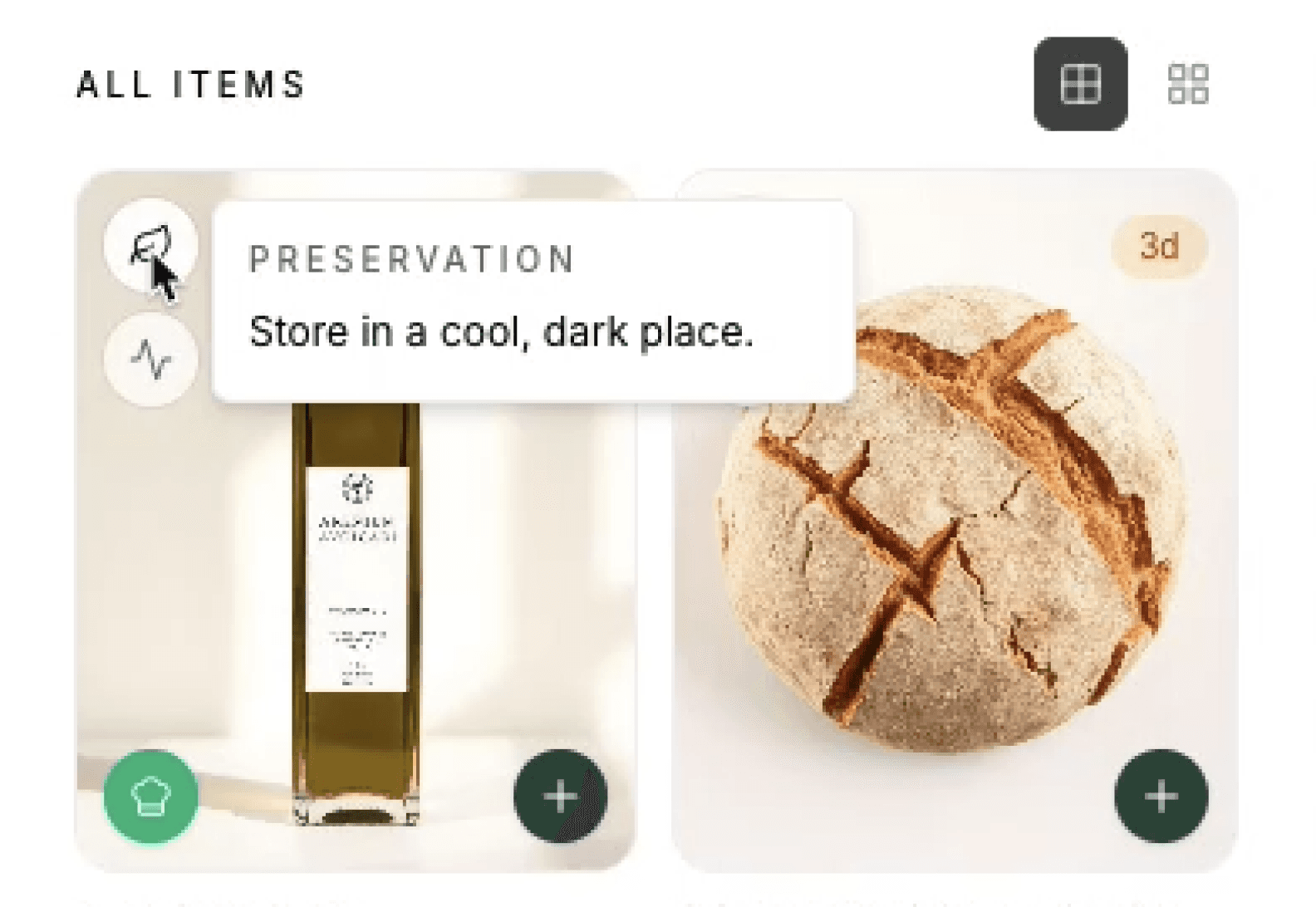
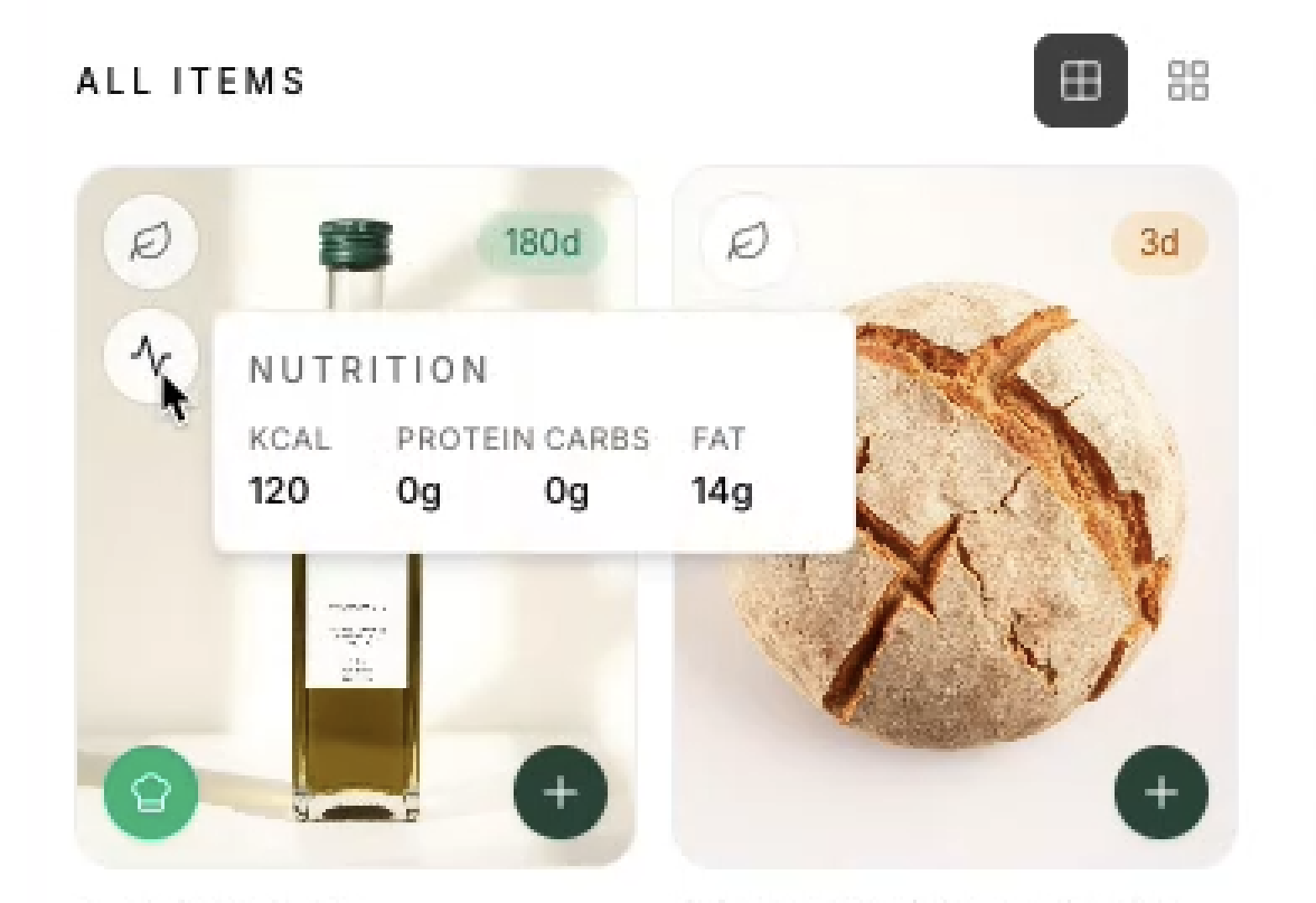
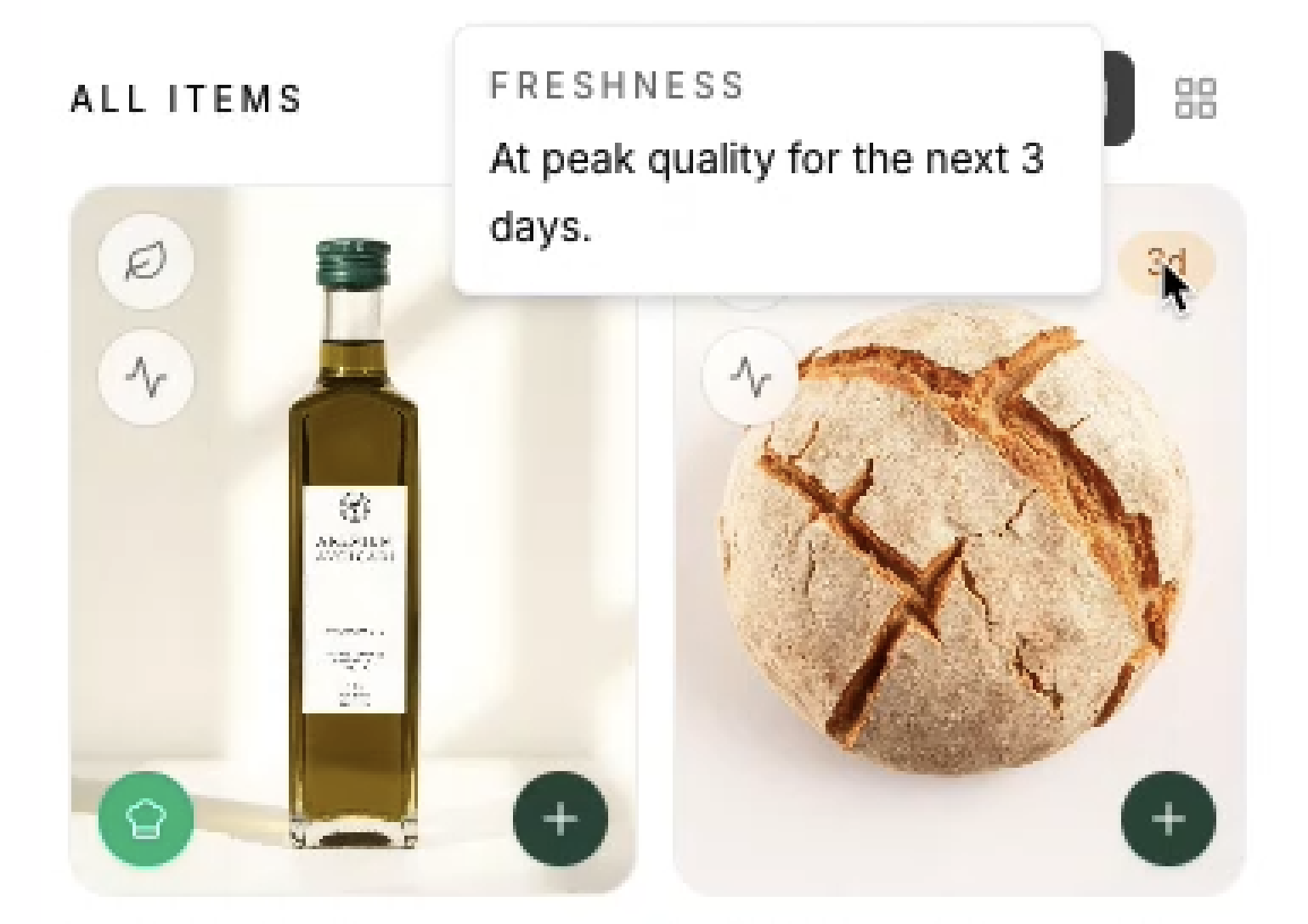
What's different is the layer underneath. Each item surfaces freshness windows, preservation tips, nutritional snapshots, and its availability in your kitchen. This gives users the context to shop with intention, not just habit.

Nouré intelligence
Noure's AI companion doesn't wait to be asked. It surfaces what's on sale at your store, what's expiring in your kitchen, and creates a listing on Commons to help share food before it goes to waste.
The more you use Nouré, the more it knows. It learns what you buy, what you skip, and what your household actually eats, and adjusts over time.
Managing food at home
Kitchen gives users a live view of what's at home, organized by freshness so what needs attention surfaces first.
Tapping a single item reveals recipes to make now and storage tips to extend its life. Selecting multiple items combines them into a recipe search, turning what's about to expire into tonight's dinner.
Being part of Commons
Commons turns surplus into connection. Users can browse what neighbors are offering for free, trade, or fee.
Anyone can post a listing in minutes: a crate of backyard apples, a sourdough loaf, eggs to trade. What could have been wasted becomes something a neighbor could use.
Managing Nouré account
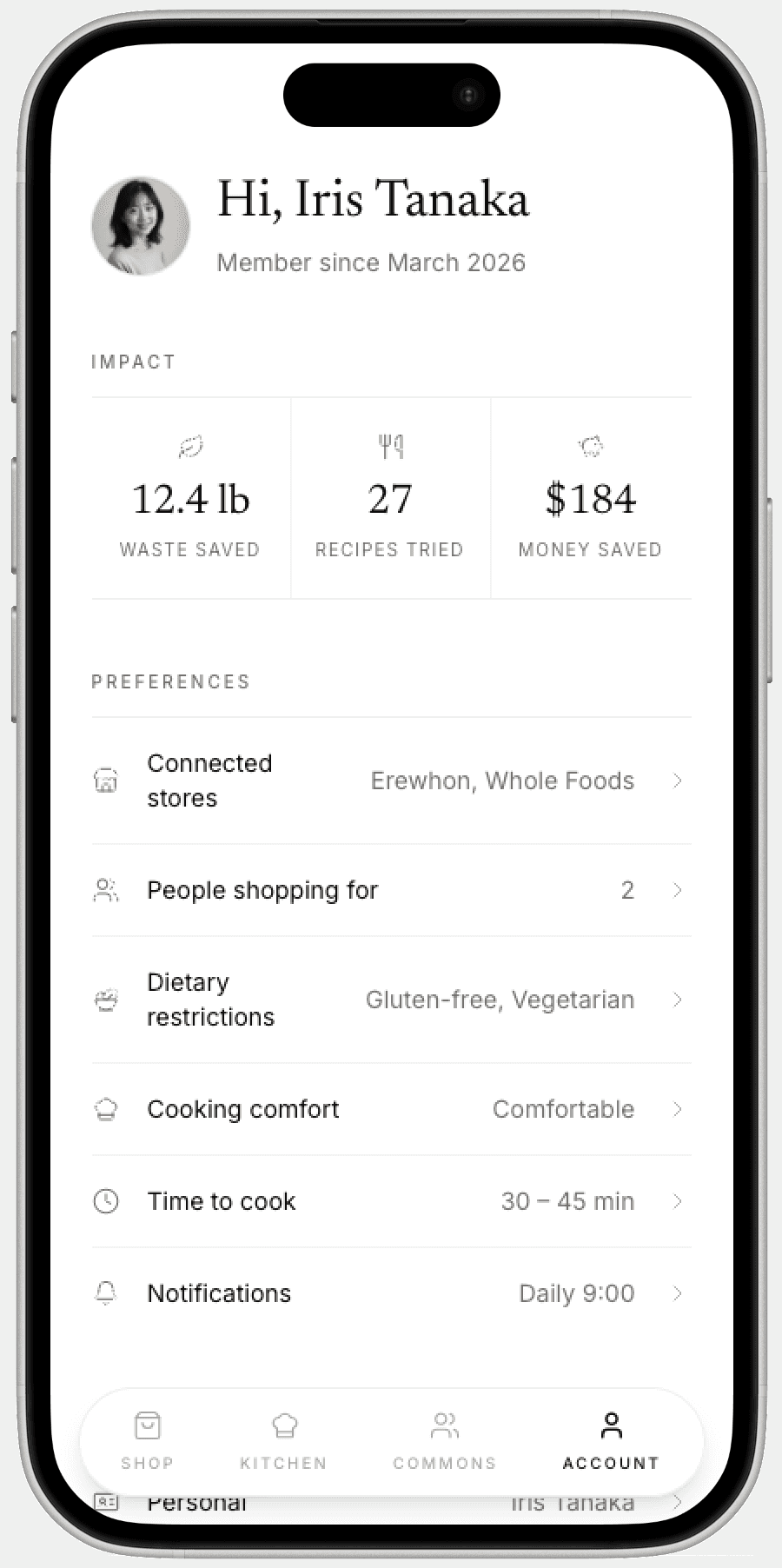
The Account tab is where Nouré becomes yours. Impact metrics reflect how the platform has adapted to your life over time.
Preferences set during onboarding live here and can be updated anytime, nothing is locked in. As life changes, Nouré adjusts with it.

REFLECTION
Integrate the retailer experience
A multi-store marketplace only works if grocery chains expose inventory and pricing at the shelf-life level. Solving the user experience was the easier half of the problem.
Balancing the threshold for intelligent AI
An AI is only valuable if it's right more often than not. Nouré's intelligence depends on what gets logged, but the real kitchen is always messier than the data. The harder challenge isn't the AI itself. It's keeping users consistent enough that it stays worth trusting.
From product to infrastructure
At what point does a food intelligence platform become infrastructure, something that cities, buildings, or communities build on top of rather than individual download?
©2026 Sayya Dushanbieva. All rights reserved.